


Quick Overview: Simple Desk Exercises for Neck & Back Relief
If you sit at a desk most of the day, your neck and back can quickly feel sore. The good news is a few simple chair exercises can ease stiffness and improve posture. Here are five to try:
- Neck Rotations: Loosen up stiff muscles by gently turning your head side to side.
- Shoulder Shrugs: Relieve built-up stress in your shoulders by lifting them up toward your ears and slowly lowering.
- Seated Hip Stretch: Cross one ankle over your opposite knee and lean forward slightly to stretch tight hips and glutes.
- Neck & Upper Back Stretch: Tilt your head up toward the ceiling, then down toward your chest, to combat “tech neck.”
- Seated Cat-Cow: Alternate arching and rounding your back while seated to mobilize the spine and ease lower back tension.
Pair these stretches with an ergonomic desk setup — proper chair height, monitor positioning, and supportive equipment — to prevent discomfort from returning.
If you spend most of your day hunched over a keyboard or staring at a monitor (and let’s be real, most of us do!), your neck and lower back discomfort is practically a badge of honor at this point. But it doesn’t have to be! If you’re feeling a little more stiff than you’d like, don’t worry. There are some quick and easy exercises for neck and lower back discomfort that you can do right at your desk to ease the tension and get your body feeling a whole lot better.
Here are five of them:
Neck Rotations: The “Stiff Neck” Move
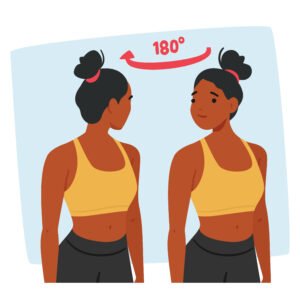
After hours of staring at your screen (or, let’s be honest, your phone), your neck can start feeling like it’s locked in place. This simple stretch will loosen up all that stiffness.
- Sit up straight in your chair (yes, your posture matters!)
- Tuck your chin mild to moderately (25-50% double chin), and rotate your head over each shoulder.
- Do at least ten times in each direction
Shoulder Shrugs: “I’m Not Carrying the World on My Shoulders”
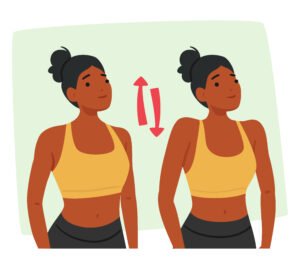 We tend to hunch our shoulders when we’re stressed or focused, but that creates tension in the neck and shoulders. Let’s change that!
- Sit up tall with your feet flat on the floor.
- Raise your shoulders up toward your ears, hold for a few seconds, then slowly lower them back down.
- Repeat ten times.
Seated Hip Stretch: “I’m a Pretzel, But In A Good Way”
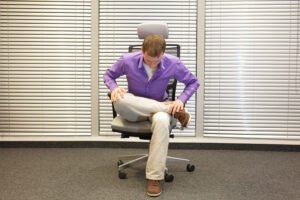 Your hips and glutes can really start to get tight after hours of sitting, triggering lower back pain. Try to take little breaks now and then to get up and move around throughout the day. Also, perform this move periodically to stretch out your hips to help alleviate lower back pain.
- Sit tall in your chair with your feet flat on the floor.
- Cross one ankle over the knee on the other leg
- Gently lean forward, keeping the back straight.
- Hold for fifteen seconds and then switch sides.
Neck & Upper Back Stretch: “Goodbye, Tech Neck”
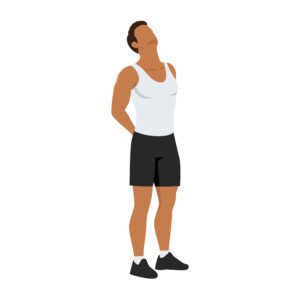 The dreaded “tech neck” is real. Hours of looking down at your phone or tilting your head forward to read your screen can really add up. But don’t worry, there’s a stretch for that!
- Sit up straight with your shoulders nice and relaxed.
- Gently tilt your head back (as if you’re looking up at the ceiling).
- Hold for ten seconds, and then bring your chin down toward your chest and hold for another ten seconds.
- Repeat this stretch at least four times.
Seated Forward Flexion/Lumbar Extension Stretch: “The Cat-Cow”
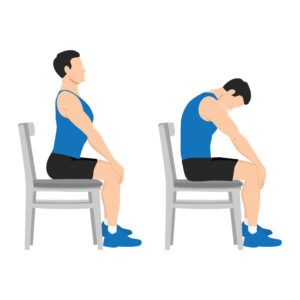 Now, let’s move on to your lower back. The seated cat-cow stretch helps to mobilize your spine, which will relieve pressure in your lower back.
- Sit up tall with your hands resting on your knees.
- Inhale as you arch your back (cow), and let your chest move forward and your shoulders open up.
- Exhale as you round your back (cat), and then tuck your chin toward your chest and pull your belly button toward your spine.
- Repeat for at least five rounds.
Conclusion
While these exercises for neck and lower back discomfort are great for getting your body moving, they’re even more effective when paired with an ergonomic setup at your desk.
Having your monitor at the right height and your chair properly adjusted with your feet flat on the floor, for instance, can make a real world of difference in preventing discomfort in the first place.
The right tools can greatly enhance your posture, allowing you to sit, stand, type, and read with ease. From lightweight laptop stands to ergonomic keyboards, we have the equipment you need to enhance your workspace for maximum comfort.
Getting up and changing positions throughout the day is one of the simplest ways to feel better and work smarter. Alternating between sitting and standing helps boost energy, improve focus, reduce stiffness, and support both physical and mental well-being. Small movements add up—and they can make a big difference in how you feel at the end of the day.
At Goldtouch, we’re big believers that the right ergonomic products can make all the difference. So, make those little changes and feel the difference!


